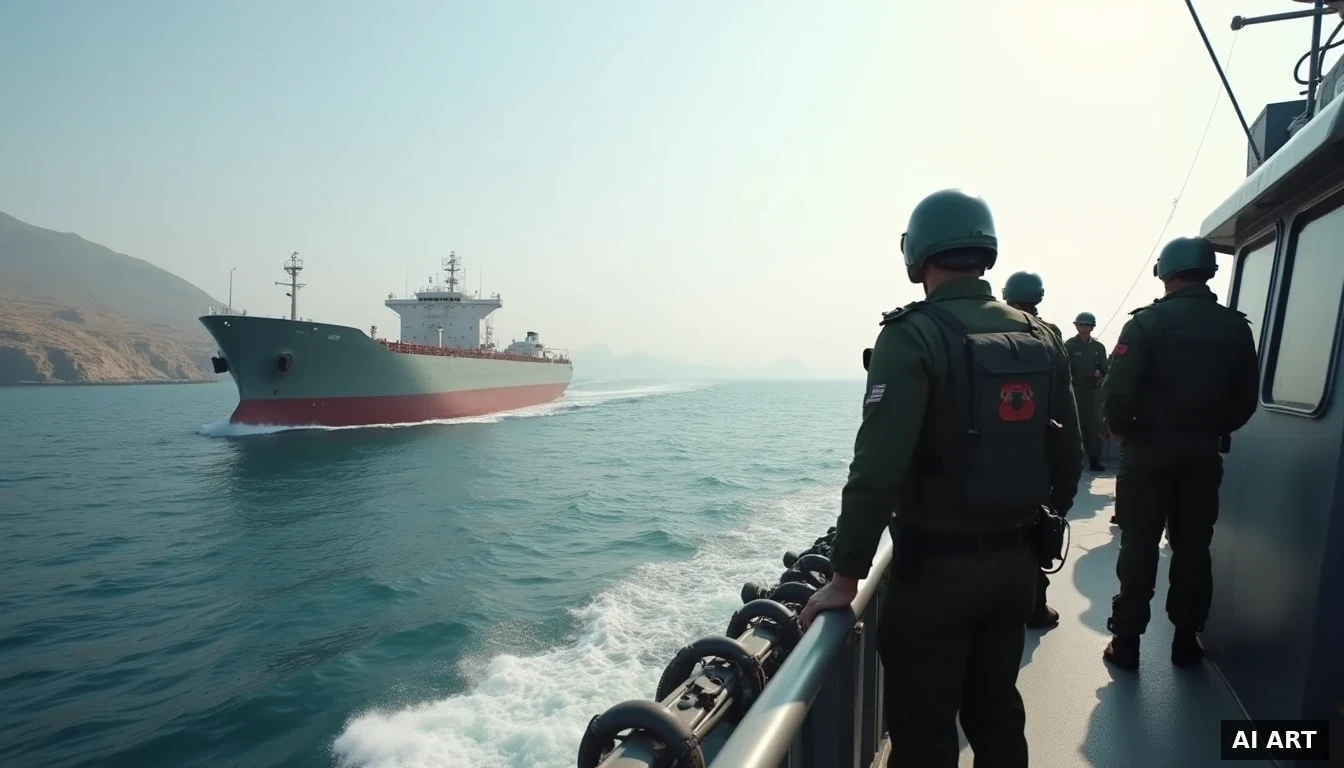
After Iran War Ends, Debate Rages Over Who 'Won': Hormuz Control and Reparations Demands Complicate Victory Claims
Multi-perspective analysis. Each perspective deliberately argues one viewpoint; none represents the editorial position of qalarc.
Months after coordinated US-Israeli airstrikes opened the 2026 Iran war on February 28 — strikes that killed Iranian Supreme Leader Ali Khamenei and dozens of senior officials — a US-Iran Memorandum of Understanding signed June 17 has formally wound the conflict down, even as Iran tightens control over Strait of Hormuz shipping and a US-mediated Israel-Lebanon framework deal struggles to hold. The unresolved argument now dominating online discussion is who actually came out ahead: the US suffered roughly 13 combat deaths while Iran lost its leadership, thousands of personnel, and an estimated $1 trillion — yet many commentators insist the outcome favors Tehran.
What the terms mean (5)
- Strait of Hormuz — A narrow waterway between Iran and Oman through which roughly a fifth of the world's oil shipments pass, making any control over transit strategically and economically significant.
- PGSA tolls/clearance — Persian Gulf Shipping Authority fees and clearance procedures Iran reinstated to charge and regulate vessels passing through the strait.
- IRGC — Iran's Islamic Revolutionary Guard Corps, the elite branch of the armed forces that has been forcing foreign tankers to follow controlled routes.
- Memorandum of Understanding (MOU) — The June 17, 2026 agreement signed by Trump and Pezeshkian at Versailles that formally wound down the war, with detailed terms still being negotiated.
- Operation Epic Fury — The codename for the coordinated US-Israeli airstrikes launched February 28, 2026 that killed Iran's supreme leader and dozens of officials.
The facts (8)
- The 2026 Iran war began February 28, 2026, when the US and Israel launched coordinated airstrikes (Operation Epic Fury) that killed Iranian Supreme Leader Ali Khamenei and dozens of officials [1][6].
- CENTCOM reported 13 US combat deaths as of April 8, 2026; a casualties tally lists roughly 15 total, including a non-hostile KC-135 crash [5][9].
- Iranian military losses were far higher: the IDF estimated 3,000-6,000+ Iranian soldiers/IRGC killed by mid-March, and Norway-based Hengaw estimated about 6,620 Iranian military deaths by April 8, alongside the supreme leader and multiple senior commanders [5].
- A US-Iran Memorandum of Understanding to end the war was signed by Donald Trump and Iranian President Masoud Pezeshkian on June 17, 2026, at Versailles; full terms, including any reparations, remain subject to follow-on negotiation [1].
- Iran is actively asserting control over the Strait of Hormuz: it reinstated PGSA tolls/clearance around June 20-21 (resuming fees after a 60-day suspension), and the IRGC forced foreign tankers to turn back on June 25 [3][8].
- Iran's ceasefire counter-proposals explicitly demanded war reparations and international recognition of Iranian sovereignty over the Strait of Hormuz [4].
- A US-mediated Israel-Lebanon framework deal was announced by Secretary of State Marco Rubio on June 26, 2026, but was rejected by Hezbollah; the Lebanon war escalated around early March 2026, making the widely cited '114-day' duration an approximation [2][7].
- Online commentators are split on the war's outcome: some call the MOU a US/Israeli defeat that gave Tehran an 'economic windfall' (echoing a CFR analysis of the war's costs), while others argue Iran was 'buck broken' given its catastrophic losses [10].
Context & background
The roots of the 2026 conflict trace to the broader regional war that began in October 2023, with Iran-aligned Hezbollah and the deterioration of the Israel-Lebanon front. The February 28 US-Israeli strikes marked a dramatic escalation by decapitating Iran's leadership. A ceasefire effort faltered through early June — CNN reported Israel and Iran traded their worst strikes in months on June 7-8 — before the June 17 Versailles MOU formally ended major hostilities [1][12]. Al Jazeera reported Israel continued attacks even after a new Lebanon ceasefire was reached [11].
Still unresolved
- What are the full terms of the June 17 MOU — particularly whether the US agreed to any reparations and on what schedule — given that follow-on negotiations remain ongoing?
- Will the Lebanon-Israel framework deal hold despite Hezbollah's rejection, and what enforcement mechanism, if any, backs it?
- What is the precise legal and operational status of the Strait of Hormuz — whether Iran's tolls and clearance regime amount to effective control or whether transit (including for US-escorted vessels) continues largely unimpeded?
The same story, argued three ways. Pick an angle — the facts above stay the same.
🧭 Cui bono — who benefits?
Beneficiaries
- Iran — De facto recognition as regional hegemon with control mechanisms over Strait of Hormuz; reparations payment legitimizes previous actions; strategic victory despite material losses
via Negotiated settlement frames Iran as equal party rather than defeated adversary; control over 20% of global oil transit creates permanent leverage; U.S. willingness to pay reparations signals acceptance of Iranian regional dominance rather than regime-change posture - China — Reduced U.S. Middle East footprint; reliable energy partner in Iran; weakened Israeli intelligence/security cooperation with U.S.
via U.S. strategic retreat creates vacuum China fills via Belt-Road energy infrastructure; Iranian oil flows East not West; Israel's diminished position reduces Five Eyes intelligence surface area in region - U.S. defense contractors (diversified portfolio players) — Prolonged conflict uncertainty sustains elevated Middle East military spending across multiple clients
via Neither decisive Israeli victory nor total collapse maximizes arms flow; extended ceasefire-breach cycles require continuous replenishment; Saudi/UAE/Egypt hedge against Iranian ascendance with procurement - European energy importers — Ceasefire stabilization without full Iranian defeat preserves alternative supply route as Russia leverage continues
via Strait remains open under managed Iranian influence rather than hot-conflict closure risk; EU accepts Iranian terms to diversify from Russian dependence; reparations are effectively insurance premium against supply disruption
Who loses
- Israel (regional military supremacy eroded; strategic depth lost; implicit acceptance of Iranian nuclear threshold status)
- Saudi Arabia (Iran gains recognition as Strait guarantor, displacing Saudi regional influence)
- U.S. regional credibility (reparations to adversary signal declining willingness to back allies with force)
- Online pro-Israel advocacy networks (hypocrisy charge gains traction as diaspora support decouples from immigration; delegitimization of armchair support)
Rivalry & conflicts of interest
- Israel harmed → Iran gains
conflict of interest: Jared Kushner's real estate and investment positions in Gulf states create incentive structure favoring regional stability and Saudi-Iranian détente over sustained Israeli military operations; U.S. Treasury personnel rotating through energy sector roles benefit from predictable Strait transit - U.S. regional hegemony harmed → China (energy security) and Russia (demonstrated Western retreat pattern) gains
conflict of interest: European energy companies with Russian and Iranian exposure gain from managed Strait access; pension funds holding energy majors prefer negotiated stability to indefinite confrontation - Pro-intervention advocacy (online and institutional) harmed → Realist/restraint foreign policy factions gains
conflict of interest: Defense budget reallocation toward Pacific theater and domestic infrastructure serves constituencies favoring Asia pivot; Treasury officials managing debt sustainability prefer reduced Middle East expenditure
Ramifications (follow the chain)
- Iranian Strait control → oil price floor rises 8-15% → inflation-sensitive voters punish incumbents → populist/isolationist candidates gain → further U.S. retrenchment → Iranian regional position consolidates in self-reinforcing cycle
- Reparations precedent → future adversaries calculate that prolonged resistance + limited losses yields negotiated legitimacy → deterrence credibility erodes → allies pursue independent nuclear capabilities (Saudi, Turkey, Egypt) → proliferation cascade
- Israel's diminished position → Gulf states formalize Saudi-Iranian normalization → petrodollar recycling shifts toward Chinese yuan-clearing mechanisms → dollar's reserve currency share erodes in energy trade → U.S. Treasury borrowing costs rise → domestic spending constrained
- Hypocrisy charge against diaspora advocacy → online support decoupled from material commitment → future mobilization capacity for interventions collapses → policy becomes purely interest-driven rather than ideology-enabled → Middle East loses domestic constituency willing to bear costs
intentional reading Treasury and Gulf-invested financial actors are deliberately engineering a managed Iranian ascendance to stabilize energy flows and pivot resources to China containment. The reparations framework—paid by taxpayers, not the invested class—purchases Strait stability while devastating Israel's position serves as acceptable collateral damage. Kushner's Gulf real estate positions and the revolving door between Treasury and energy majors create direct financial incentive to accept Iranian regional dominance in exchange for predictable transit fees. The 'hypocrisy' narrative is amplified to delegitimize grassroots pro-Israel advocacy that might otherwise constrain this elite realignment. This explains the paradox of framing Iran as victorious despite catastrophic losses: the narrative itself is the policy instrument, preparing publics for acceptance of a new regional order that serves creditor and energy interests over alliance commitments.
structural reading No coordination required: Treasury personnel managing $34T debt need stable energy prices more than distant alliance commitments; European importers facing Russian cutoffs will pay any political price for Strait access; China purchases Iranian oil regardless of U.S. preferences, making confrontation costly and accommodation profitable; defense contractors maximize revenue in extended ambiguous conflicts rather than quick victories; Gulf sovereign wealth funds profit from regional stability enabling development mega-projects. Israel's qualitative military edge erodes naturally as Iranian drone/missile technology matures and proliferates. The 'hypocrisy' charge spreads organically because it's true—keyboard advocacy costs nothing while immigration to conflict zones costs everything, and audiences recognize the gap without prompting. Reparations emerge not from strategy but from debt-driven risk aversion: paying to avoid oil shock is rational when borrowing costs are existential threat. The outcome is overdetermined by aligned material interests across multiple domains.
📊 Trading signals — winners & losers
Tradeable instruments most exposed to this story, inferred from the analysis above. Not financial advice — informational only, generated by AI from forum discussion and may be wrong.
📈 Likely winners
- ▲ CLcommodityCrude Oil$82.167d +8.4%✓ +10.7% since callStrait of Hormuz control concerns elevate oil risk premium
- ▲ BZcommodityBrent Crude$89.887d +13.3%✓ +14.1% since callMiddle East supply route uncertainty supports pricing power
- ▲ LMTstockLockheed Martin$603.167d +3.5%✓ +19.2% since callProlonged regional conflict sustains elevated defense spending demand
- ▲ NOCstockNorthrop Grumman$577.897d +6.5%✓ +12.6% since callMulti-client Middle East military procurement cycle extends uncertainty
- ▲ RTXstockRTX Corporation$224.127d +4.1%✓ +13.9% since callRegional instability drives missile defense and systems upgrades
📉 Likely losers
- ▼ EISETFiShares MSCI Israel ETF$121.627d +1.9%✗ +1.8% since callEroded regional supremacy and strategic depth undermine Israeli assets
- ▼ BSIFstockBluefield Solar Income FundIsraeli solar exposure faces geopolitical and investment confidence pressure
📈 Call performance — day by day
| date | price | vs entry |
|---|---|---|
| 2026-07-29 | $82.23 | +10.8% |
| 2026-07-30 | $83.50 | +12.5% |
| 2026-07-31 | $84.09 | +13.3% |
| 2026-08-01 | $86.80 | +17.0% |
| 2026-08-02 | $84.67 | +14.1% |
| 2026-08-03 | $84.67 | +14.1% |
| 2026-08-04 | $79.88 | +7.7% |
| 2026-08-05 | $74.88 | +0.9% |
| 2026-08-06 | $74.98 | +1.1% |
| 2026-08-07 | $78.07 | +5.2% |
| 2026-08-08 | $77.08 | +3.9% |
| 2026-08-09 | $78.18 | +5.4% |
| 2026-08-10 | $78.73 | +6.1% |
| 2026-08-11 | $82.21 | +10.8% |
showing last 14 of 22 days
| date | price | vs entry |
|---|---|---|
| 2026-07-29 | $87.19 | +10.7% |
| 2026-07-30 | $89.21 | +13.3% |
| 2026-07-31 | $87.98 | +11.7% |
| 2026-08-01 | $90.12 | +14.5% |
| 2026-08-02 | $90.12 | +14.5% |
| 2026-08-03 | $90.12 | +14.5% |
| 2026-08-04 | $83.64 | +6.2% |
| 2026-08-05 | $78.92 | +0.2% |
| 2026-08-06 | $79.76 | +1.3% |
| 2026-08-07 | $83.43 | +6.0% |
| 2026-08-08 | $82.27 | +4.5% |
| 2026-08-09 | $83.55 | +6.1% |
| 2026-08-10 | $84.29 | +7.0% |
| 2026-08-11 | $87.62 | +11.3% |
showing last 14 of 22 days
| date | price | vs entry |
|---|---|---|
| 2026-07-29 | $581.31 | +14.9% |
| 2026-07-30 | $569.20 | +12.5% |
| 2026-07-31 | $574.11 | +13.5% |
| 2026-08-01 | $582.74 | +15.2% |
| 2026-08-02 | $582.74 | +15.2% |
| 2026-08-03 | $582.74 | +15.2% |
| 2026-08-04 | $586.29 | +15.9% |
| 2026-08-05 | $589.33 | +16.5% |
| 2026-08-06 | $577.60 | +14.2% |
| 2026-08-07 | $582.85 | +15.2% |
| 2026-08-08 | $587.95 | +16.2% |
| 2026-08-09 | $587.95 | +16.2% |
| 2026-08-10 | $587.95 | +16.2% |
| 2026-08-11 | $603.16 | +19.2% |
showing last 14 of 22 days
| date | price | vs entry |
|---|---|---|
| 2026-07-29 | $549.22 | +7.1% |
| 2026-07-30 | $535.05 | +4.3% |
| 2026-07-31 | $534.85 | +4.3% |
| 2026-08-01 | $542.48 | +5.7% |
| 2026-08-02 | $542.48 | +5.7% |
| 2026-08-03 | $542.48 | +5.7% |
| 2026-08-04 | $548.47 | +6.9% |
| 2026-08-05 | $551.55 | +7.5% |
| 2026-08-06 | $557.47 | +8.7% |
| 2026-08-07 | $567.74 | +10.7% |
| 2026-08-08 | $571.58 | +11.4% |
| 2026-08-09 | $571.58 | +11.4% |
| 2026-08-10 | $571.58 | +11.4% |
| 2026-08-11 | $577.89 | +12.6% |
showing last 14 of 22 days
| date | price | vs entry |
|---|---|---|
| 2026-07-29 | $218.58 | +11.1% |
| 2026-07-30 | $215.25 | +9.4% |
| 2026-07-31 | $214.38 | +8.9% |
| 2026-08-01 | $215.22 | +9.4% |
| 2026-08-02 | $215.22 | +9.4% |
| 2026-08-03 | $215.22 | +9.4% |
| 2026-08-04 | $216.65 | +10.1% |
| 2026-08-05 | $217.93 | +10.7% |
| 2026-08-06 | $222.31 | +13.0% |
| 2026-08-07 | $223.25 | +13.5% |
| 2026-08-08 | $223.03 | +13.3% |
| 2026-08-09 | $223.03 | +13.3% |
| 2026-08-10 | $223.03 | +13.3% |
| 2026-08-11 | $224.12 | +13.9% |
showing last 14 of 22 days
| date | price | vs entry |
|---|---|---|
| 2026-07-29 | $118.76 | -0.6% |
| 2026-07-30 | $115.83 | -3.1% |
| 2026-07-31 | $119.08 | -0.4% |
| 2026-08-01 | $119.35 | -0.1% |
| 2026-08-02 | $119.35 | -0.1% |
| 2026-08-03 | $119.35 | -0.1% |
| 2026-08-04 | $119.65 | +0.1% |
| 2026-08-05 | $122.78 | +2.7% |
| 2026-08-06 | $120.28 | +0.6% |
| 2026-08-07 | $120.82 | +1.1% |
| 2026-08-08 | $123.64 | +3.5% |
| 2026-08-09 | $123.64 | +3.5% |
| 2026-08-10 | $123.64 | +3.5% |
| 2026-08-11 | $121.62 | +1.8% |
showing last 14 of 22 days
📊 See how every call has performed — the full scoreboard & API →
From the threads
The posts that drew the most replies in the source discussion — shown as posted. Reactions ranged across the spectrum; these are the ones people actually engaged with. Each quote links to its archived source thread so you can verify it; quotes we couldn't tie to a source thread are marked source unverified.
People who are selling how great Israel is, but won't move there,that's weird right.
NEW TWEET NEW TWEET https://truthsocial.com/@realDonald Trump/posts/116799154100072125
YOU HAVE GOT TO BE KIDDING ME YOU HAVE GOT TO BE FUCKING KIDDING ME ISRAEL ISN'T EVEN CLAIMING THEY WERE SHOT AT THEY JUST SAW SOMEONE IN A BULLDOZER CLEARING RUBBLE AND OPENED FIRE
According to chatter the reason the US capitulated is that the P********'s told Trump that Iran would demonstrate their nuclear capabilities by carrying out a test of a warhead in a remote location, this spooked Trump's cabinet so much that they were willing to agree to Iran's 14 point plan.
The head of the octopus is Iran. Without Iran money, Hezbollah can't pay its employees or rebuild villages. Shia will become impoverished, and more likely to sue for peace. Now only reason it is their fight is because they are paying paid richly for it. They have no special affinity for Palestinian Arabs and originally Shia wanted to join Israel.
Links shared in the discussion
Primary sources the threads posted — verify independently. These sometimes point to leads other coverage misses.
Continue the discussion
Add your own take — replies are kept on this article and can be upvoted.
🔗 Related Analysis
- Netanyahu reaffirms military directive; US Treasury issues Iran oil sanctions waiver shared: iran, israel, lebanon, netanyahu, strait of hormuz, u s department of treasury
- Ongoing ceasefire tracking with Lebanon and Iran amid paused Operation Project Freedom shared: iran, israel, lebanon, strait of hormuz
- Peace agreement signing scheduled for June 19 amid ongoing ceasefires shared: iran, israel, lebanon
- Israel portrayed as subordinate to Iran in geopolitical balance shared: iran, israel, lebanon
- Persia-Israel ceasefire tracking thread Day 26 Lebanon, Day 38 Gaza operations shared: iran, israel, lebanon
- Trump Israel policy shift opening Strait of Hormuz to Iran war scenario shared: iran, israel, strait of hormuz
References
- [1] ◎ 2026 Iran war - Wikipedia
- [2] ◎ 2026 Lebanon war - Wikipedia
- [3] ◎ 2026 Strait of Hormuz crisis - Wikipedia
- [4] ◎ 2026 Iran war ceasefire - Wikipedia
- [5] ◎ Casualties of the 2026 Iran war - Wikipedia
- [6] ◎ 2026 Iran war - Britannica
- [7] ◖ US strikes Iran after Strait of Hormuz cargo ship attack as ceasefire tensions escalate - Fox News (June 26, 2026)
- [8] Iran Tightens Grip on Strait of Hormuz as Shipping Forced into Controlled Routes - HSToday
- [9] Iran War Casualties - militaryspend.org (citing CENTCOM/Military Times)
- [10] ◑ Was It Worth It? The True Cost of Trump's Iran War - Council on Foreign Relations
- [11] ◎ Iran war updates: Israel continues attacks after new Lebanon ceasefire - Al Jazeera
- [12] ◗ June 7-8, 2026 — Ceasefire falters as Israel and Iran trade worst strikes in months - CNN
- [13] ◎ Israel continues attacks after Lebanon ceasefire — Al Jazeera
- [14] ◑ Israel and Iran trade worst strikes in months — CNN Middle East
- [15] ◎ Israel continues attacks after Lebanon ceasefire reached — Al Jazeera
◖ supportive · ◗ critical · ◎ neutral wire · ◑ partisan · ⚑ state outlet
▾ Discussion
Select any text in the article to comment on that passage.