Logo Design Submission — March 2026

Path­finders

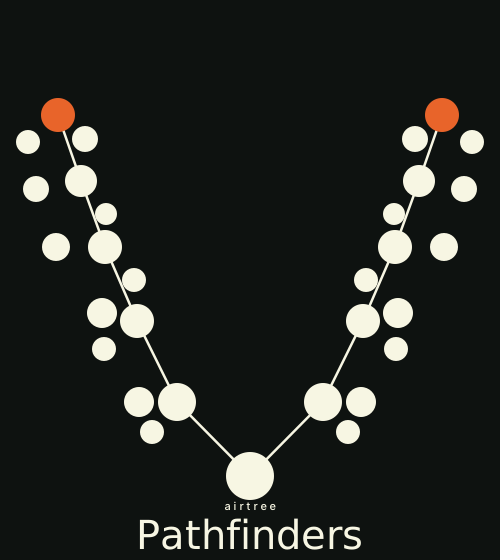
A plant-inspired node network — two paths rising from one root, like local flora branching outward. Drawn in the Airtree visual language.

scroll to explore ↓

The Brief

What Pathfinders needs

A logo for Airtree's student program — for builders, creators and future founders. It must feel curious, connected, ambitious and young.

Curiosity & Exploration

The love of discovering new paths. Forward motion built into every node and edge.

Community & Connection

Nodes that connect — a network of ambitious individuals building together.

Youthful Spirit

Approachable yet credible. Works on a hoodie, a website, a business card.

Brand Alignment

Lives alongside Airtree. The node-tree visual language — extended and evolved.

Colour Palette

Remu#262D29
Manuka#F7F6E3
Wattle#E8642A
Rimu#4A6741
Sage#B5C4B1
Slate#6B7F8B

Typography

Display — Prody Regular
↳ Free substitute: Cormorant Garamond

Pathfinders

Body / UI — Suisse Int'l
↳ Free substitute: Inter

airtree pathfinders

⚠ Suisse Int'l and Prody Regular are the official Airtree typefaces. Inter and Cormorant Garamond are used here as open-source substitutes. Final submission would use licensed fonts or assets supplied by Airtree.

Final Design

Twin Paths — Flora Node Network

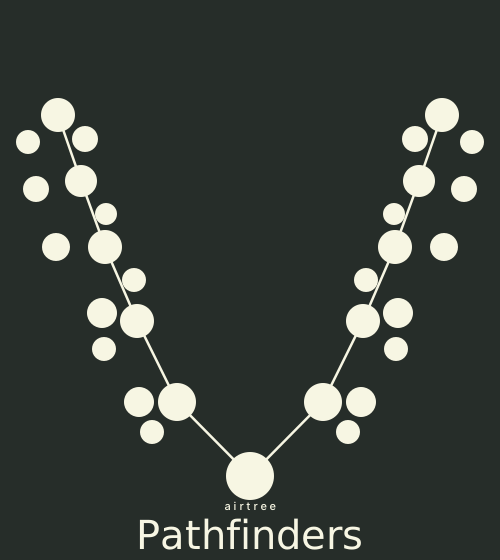
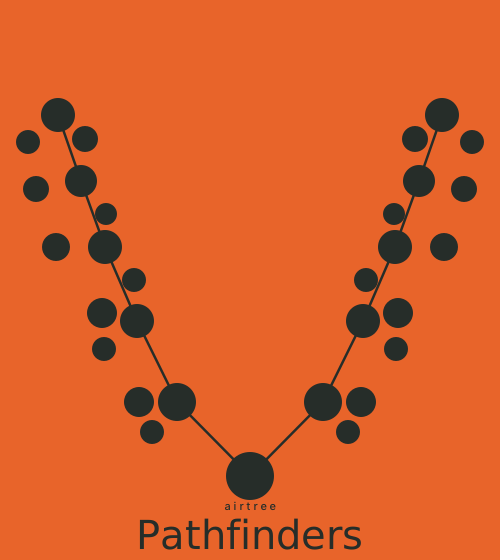
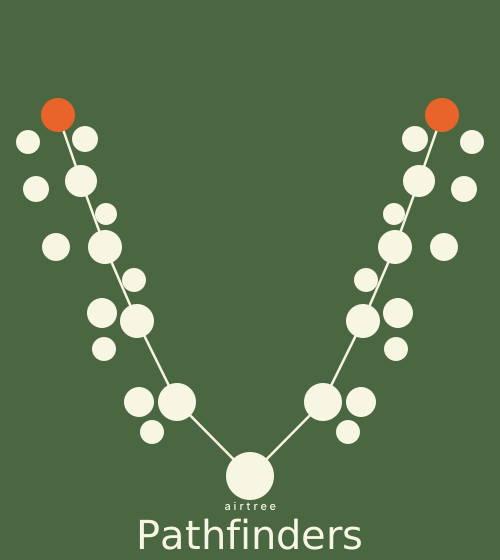
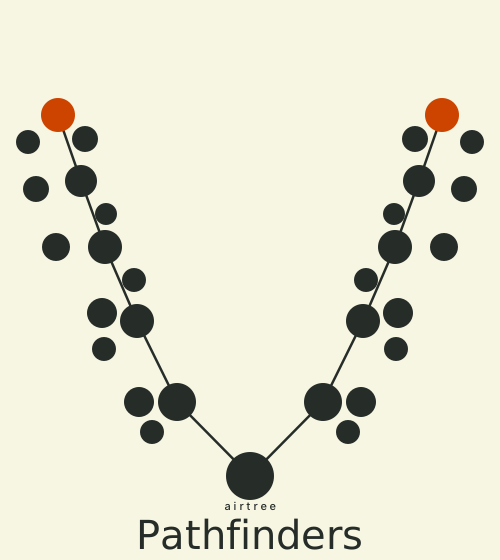
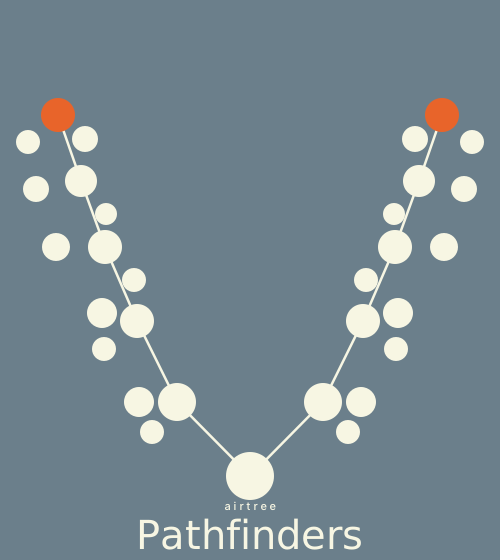
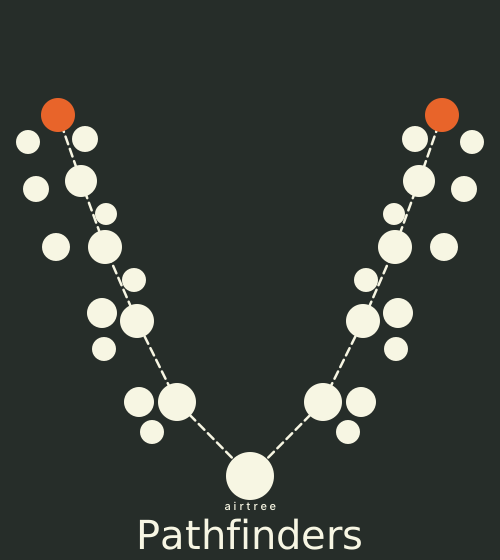
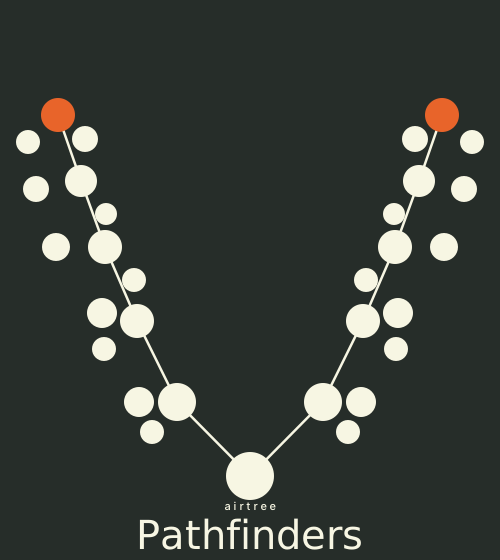
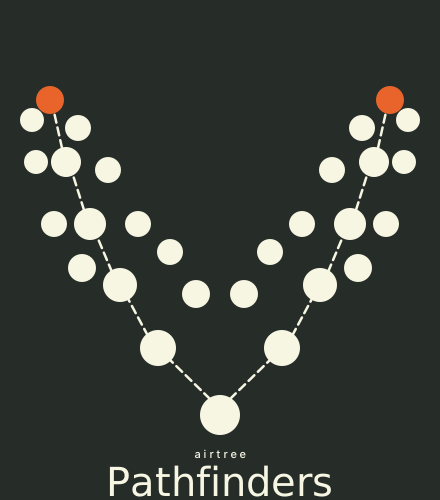
A V-shaped node network inspired by Australian and New Zealand native plants — two paths rising from a shared root, with loose satellite nodes floating beside each path like leaves around a stem. Six colour variants. Click any swatch to switch.

Twin Paths — Flora Node Network

Two paths rise from one shared root — a V-shaped node network inspired by Australian and New Zealand native plants.
Final Submission Plant-Inspired Twin Paths
Remu
Remu + Orange
Solid Orange
Solid + Orange
Solid Cream
Solid + Cream
Wattle
Wattle
Rimu
Rimu
Manuka
Manuka
Night
Night
Slate
Slate
Flora Twin Paths
Remu × Manuka — Primary

Design Notes

  • Single large root node at base — one shared origin, one program
  • Two paths arc upward and outward in a wide V — the moment a single journey becomes two
  • Loose satellite nodes float beside each path — like leaves around a stem, not all connected
  • Orange wattle accent at each tip — the discovery point, the destination reached
  • Inspired by local flora: wattle sprays, gum leaf formations, native branching patterns
  • Dashed spine reflects Airtree's existing sketchy node-tree style
  • Large blob nodes dominant — the nodes ARE the mark, edges are secondary

Design Direction

"Two paths from one root — the shape of every great beginning."

After exploring geometric spirals, compass forms and architectural grids, the decision came back to something organic and immediate. The final logo draws directly from local Australian and New Zealand flora — the way wattle, gum and native shrubs branch outward from a single stem. Two paths, not one. A V-shape that reads as plant, as divergence, as invitation. The loose satellite nodes aren't decorative — they're the community forming around each path, connected but not constrained. This is a logo for people who go their own way, but know they didn't start alone.
Design Rationale

Plant-inspired, path-driven

The final design comes from looking at how native Australian and New Zealand plants actually grow — a single root, two arms reaching outward, loose nodes forming like leaves and seed clusters along each branch.

Why plant-inspired?

Local flora — wattle, gum, ti tree, grevillea — all share the same logic: one origin, multiple diverging paths, with organic clusters of nodes forming loosely along each branch. This is exactly what Pathfinders is: one program, many individual journeys branching outward into the world.

Why the V-shape?

The wide V is the moment a single path becomes two. It's open at the top — not closed, not resolved — because a pathfinder's journey doesn't end, it expands. The negative space in the centre is as important as the nodes: it's the territory still to be explored.

Why loose, unconnected nodes?

Not every node on the path needs an edge. The floating satellite nodes represent people and ideas that orbit each journey — connected by proximity and context, not by direct lines. Real networks aren't fully connected graphs. They're loose, organic, full of space and possibility.

Why orange at the tips?

Wattle orange (#E8642A) marks the discovery point — the tip of each path, where you've arrived somewhere new. In native plants the most vivid colour is at the flower tip or seed head. Orange is Airtree's accent: it means something is happening, something has been found.

Why Manuka × Remu?

Remu (#262D29) is Airtree's ground — dark, earthy, serious. Manuka cream (#F7F6E3) is the mark on top: warm, legible, alive. Together they are the palette of the Pathfinders brief itself. This logo completes what the brand already started.

Why dashed edges?

The dashed spine is native to Airtree's existing node-tree icon system. Keeping it ties this mark directly to the parent brand's visual language. It also gives the path a sense of motion — a trail being made, not a road already built.

"Two paths from one root — the shape of every great beginning, and every plant that ever found the light."

Alternative Design

Gum Leaf Twin Ovals

A second direction — two diagonal oval node-clouds like eucalyptus leaves hanging from one stem. Each leaf has a central axis of large nodes with smaller orbit blobs on both sides. Recovered and restored after being lost during the project.

Gum Leaf Twin Ovals
Remu × Manuka — Gum Leaf variant

Design Notes

  • Two diagonal leaf-shaped node clouds — like two eucalyptus leaves on a shared petiole
  • Each leaf axis: large spine nodes (r=18→14) tapering toward the tip
  • Orbit blobs on both inner and outer sides of each axis — bilateral, organic
  • Loose central blobs between the two arms — the negative space breathes
  • Orange wattle at each leaf tip — the terminal bud, the growing point
  • Single large root node connects both leaves at the base
  • Dashed spine — same visual language as the primary design